
Family roles don’t disappear when someone enters recovery — they often become clearer.
In many families impacted by substance use, unspoken roles develop over time:
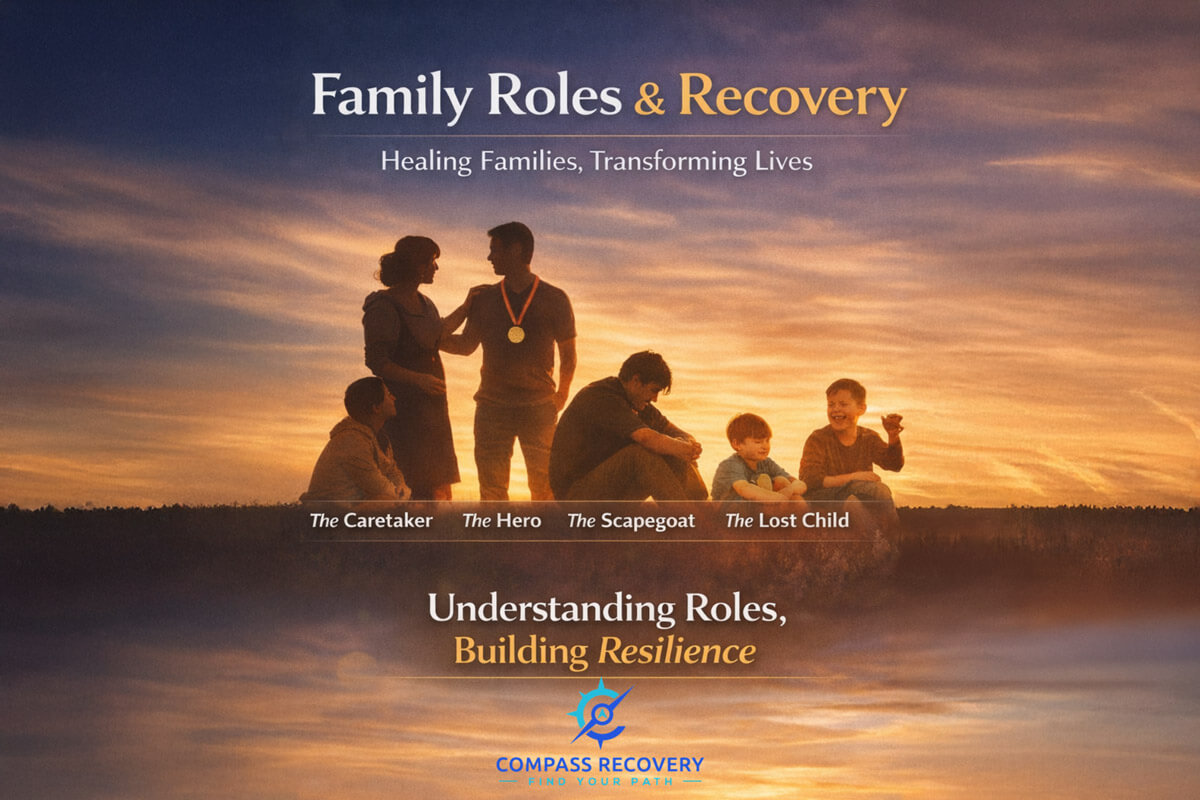
The Caretaker. The Hero. The Scapegoat. The Lost Child. The Mascot.
These roles are not random. They form as survival strategies. When addiction creates unpredictability, fear, or instability, families naturally adapt. Each member unconsciously finds a way to cope with stress and maintain some sense of balance. In many cases, these roles help the family function during incredibly difficult seasons.
But when recovery begins, the very roles that once protected the family can start to feel uncomfortable — even disruptive.
Understanding Common Family Roles
While every family is unique, certain patterns tend to show up repeatedly in households affected by substance use:
- The Caretaker (or Enabler): Often the one who smooths things over, makes excuses, fixes problems, or shields others from consequences. Their intentions are rooted in love, but over time this role can unintentionally prevent accountability.
- The Hero: The overachiever who strives for perfection to restore pride and stability to the family. They often carry intense pressure to “make everything okay.”
- The Scapegoat: Frequently blamed or labeled as the “problem child,” this role can distract attention away from the substance use issue.
- The Lost Child: The quiet one who withdraws to avoid conflict. They may struggle with expressing needs or emotions.
- The Mascot: Uses humor or charm to deflect tension, bringing lightness to heavy situations while often hiding deeper feelings.
These roles develop gradually. No one consciously chooses them. They arise out of love, fear, protection, and survival.
Why Roles Feel Stronger in Early Recovery
When someone enters treatment or begins outpatient care, the entire system begins to shift. The individual in recovery is learning new coping skills, accountability, boundaries, and communication tools. As they change, the family dynamic changes too.
This can create discomfort.
The Caretaker may struggle to step back.
The Hero may feel unsure without the pressure to perform.
The Scapegoat may question long-held identities.
The Lost Child may need to learn how to speak up.
The Mascot may begin to feel emotions they once masked with humor.
Growth often feels destabilizing at first — but it is also where healing begins.
Recovery Is a Family Process
At Compass Recovery Treatment, we recognize that recovery is not just about the individual. It’s about the system surrounding them. Substance use affects relationships, communication patterns, trust, and boundaries. For recovery to be sustainable, families often need support as well.
Through education, therapeutic guidance, and structured outpatient programming, families can:
- Learn how to support without enabling
- Set healthy and consistent boundaries
- Improve communication
- Rebuild trust gradually
- Process their own emotions and experiences
When families understand the roles they’ve played, they gain the power to shift them. Awareness creates choice. And choice creates change.
You Are Not Alone
If you or a loved one is struggling with substance, use or alcohol use, support is available. Recovery can feel overwhelming, but you do not have to navigate it alone.
Compass Recovery Treatment offers compassionate, structured outpatient care designed to support both individuals and families through every stage of the recovery journey. Our team works collaboratively to help identify the right level of care and develop a treatment plan tailored to each person’s needs.
If you’re ready to explore treatment options or simply want more information, we encourage you to reach out. A conversation can be the first step toward meaningful change.
📞 Call Compass Recovery Treatment at 844-844-2915 to learn more about available programs and how we can help.
Healing doesn’t happen in isolation. It happens together — and help is just a phone call away.